The way we create our structures has undergone a profound shift. Constructing with an eye on the future is no longer a specialist choice but a core principle in modern architecture and construction.
This integrated approach considers environmental, economic, and social factors across a project’s entire life. It addresses everything from the initial site selection to the eventual deconstruction of the building.
According to frameworks like that of the EPA, this practice involves creating structures and using processes that are environmentally responsible. The goal is resource efficiency at every stage, from planning and construction to operation and maintenance.
A truly successful project achieves a crucial balance. It minimises its environmental footprint while actively enhancing the well-being of its occupants. This is accomplished through careful planning and the implementation of innovative, efficiency-focused practices.
This guide serves as a comprehensive resource for professionals in the United Kingdom. It aims to help architects, developers, and construction specialists implement realistic goals. The focus is on creating resilient structures prepared for future environmental challenges.
Key Takeaways
- Green construction principles have moved from a niche interest to a fundamental requirement in the industry.
- This approach integrates environmental, economic, and social considerations throughout a structure’s entire lifecycle.
- The core aim is to balance reducing environmental impact with increasing occupant health and comfort.
- Efficiency, conservation, and innovation are central to achieving successful outcomes.
- Understanding these practices is increasingly vital within the UK’s specific regulatory and climate context.
- This guide will explore key areas like energy efficiency, material selection, and water conservation.
Introduction to Sustainable Building Design and Property Development Strategies
Modern construction methodologies carry substantial environmental consequences that cannot be ignored. The industry accounts for 37% of global greenhouse gas emissions, creating an urgent need for change.
Understanding the Need for Sustainable Practices
Traditional methods generate significant ecological impacts. Land excavation disrupts habitats while machinery operations contribute to air pollution. Material sourcing often involves irresponsible practices that damage ecosystems.
Construction processes affect environments throughout their entire lifecycle. Ongoing energy consumption for heating and lighting creates persistent carbon emissions. Dark roofing materials contribute to urban heat island effects.
“The construction sector must evolve to meet climate challenges while maintaining economic viability.”
Ethical considerations extend beyond environmental factors. Fair labour practices and respect for indigenous rights form crucial social dimensions. Protection of cultural heritage sites demonstrates comprehensive responsibility.
| Aspect | Traditional Approach | Sustainable Method |
|---|---|---|
| Material Sourcing | Potential habitat destruction | Ethically harvested resources |
| Energy Consumption | High operational costs | Efficient systems implementation |
| Social Impact | Variable labour standards | Fair wages and conditions |
Market awareness drives demand for environmentally responsible structures. Investors increasingly prioritise projects demonstrating measurable ecological benefits. Regulatory compliance and reduced operational costs create compelling business cases.
This growing recognition aligns with global climate objectives. Property values enhance when structures incorporate forward-thinking principles. The industry’s transformation addresses both immediate and long-term needs.
Core Principles of Green and Sustainable Construction
Seven interconnected principles form the backbone of environmentally responsible construction methodologies. This framework guides projects from initial planning through long-term operation.
It ensures a holistic approach that minimises ecological impact. The focus is on creating efficient, healthy, and durable structures.
Eco-friendly Materials and Waste Reduction
Material selection is a critical first step. Choosing renewable, repairable resources with certifications like FSC is essential. This practice supports ethical sourcing and protects natural habitats.
Waste reduction strategies are equally important. Reusing and recycling existing materials cuts down on landfill use. Designing for adaptability allows structures to be repurposed easily, embracing circular economy ideas.
The table below contrasts key aspects of material use and waste management.
| Focus Area | Conventional Method | Green Principle |
|---|---|---|
| Material Sourcing | Virgin resources, limited certifications | Certified, renewable, or recycled content |
| Waste Management | High landfill disposal | Reuse, recycling, and design for deconstruction |
| Long-term Vision | Fixed function, potential obsolescence | Adaptable spaces for future needs |
Enhancing Energy and Water Efficiency
Energy efficiency is a dual priority. It involves both the construction process and the final design. High-performance insulation and efficient appliances are fundamental.
Water conservation is also crucial. Using low-flow fixtures and leak detection systems protects valuable freshwater resources. These measures align with regulations and reduce operational costs.
Creating durable structures with quality materials ensures longevity. This reduces the need for future replacements and resource use.
Implementing Sustainable Building Design and Property Development Strategies
Translating environmental objectives into practical outcomes requires a systematic framework for project execution. This approach ensures that theoretical principles become measurable achievements.
The process begins with establishing clear, quantifiable goals. Key Performance Indicators (KPIs) track progress across multiple areas. These metrics might target energy reduction, waste minimisation, or indoor air quality improvements.
Selecting appropriate KPIs depends on project-specific factors. Geographic location, climate conditions, and budget constraints all influence priorities. A thorough site analysis identifies natural features and environmental opportunities.
Effective implementation involves engaging all stakeholders from the outset. Clients, architects, and contractors must align on objectives. This collaboration ensures shared commitment to environmental targets.
Specific strategies are then chosen to address identified KPIs. Options include locally sourced materials or high-efficiency HVAC systems. Monitoring protocols track performance throughout construction and operation.
Data-driven adjustments allow for continuous improvement. This adaptive management style verifies that goals are being met effectively. The result is a structure that performs as intended environmentally.
Innovative Energy Solutions and Indoor Environmental Quality
Forward-thinking energy solutions now play a pivotal role in enhancing structure performance and occupant comfort. These approaches combine cutting-edge technology with intelligent design principles.
Integrating Renewable Energy Systems
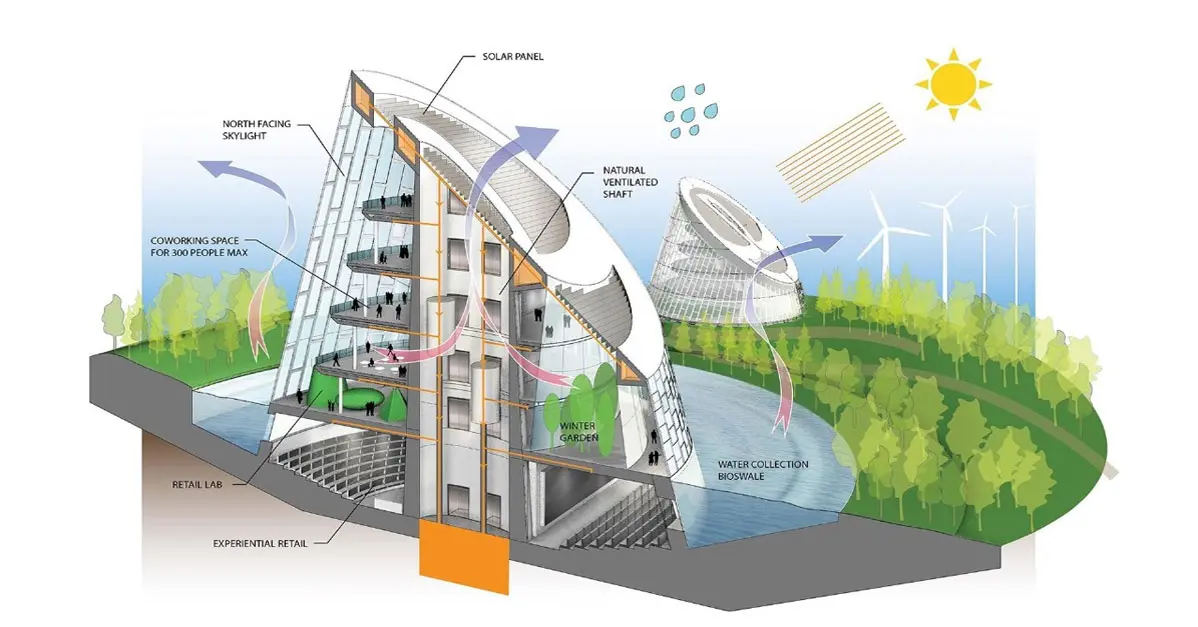
Renewable energy systems like solar panels and wind turbines provide reliable, cost-effective power generation. They work best when combined with passive strategies that maximise natural energy use.
The Bullitt Center in Seattle demonstrates remarkable outcomes. Its solar panel systems generate more energy than the structure consumes annually.
Strategic orientation captures maximum sunlight exposure throughout the year. This reduces dependence on fossil fuels and lowers operational carbon footprints.
Smart HVAC & Optimised Lighting
Natural lighting utilisation significantly reduces artificial lighting requirements. Strategic window placement and light shelves enhance daylight penetration into interior spaces.
Energy-efficient lighting systems incorporate LED technology and smart controls. These automatically adjust based on occupancy and natural light availability.
Advanced HVAC systems feature variable-speed motors and high-efficiency filters. Smart thermostats optimise heating and cooling schedules for maximum efficiency.
Building automation technologies monitor and control energy systems remotely. This enables data-driven management that achieves substantial consumption reductions.
Water Conservation and Efficient Systems in Building Design
The management of water, from supply to disposal, offers significant opportunities for efficiency gains. Comprehensive strategies are essential to reduce consumption and protect freshwater resources.
These approaches manage stormwater effectively and minimise waste. They form a crucial part of creating responsible, efficient structures.
Innovative Rainwater Harvesting Techniques
Rainwater harvesting systems collect runoff from roofs. This water is stored in tanks or underground reservoirs for non-potable uses.
Applications include garden irrigation, toilet flushing, and laundry. In the UK, this water is classified as non-potable, meaning it is not for drinking.
Residential properties can see water bill reductions of 40-50%. This makes the system a smart financial and ecological choice.
Greywater reuse offers another layer of efficiency. This involves recycling water from sinks, showers, and washing machines.
The recycled water is suitable for secondary uses like irrigation. It significantly reduces demand on mains water supplies.
Stormwater management techniques also play a key role. Green roofs absorb rainfall, while porous pavement allows water to infiltrate the ground.
Retention ponds manage runoff, reducing flood risks. These methods also help to recharge groundwater levels naturally.
Inside the structure, water-efficient fixtures make a substantial difference.
- Faucet aerators can reduce flow by up to 10 litres per minute.
- Waterless urinals eliminate flushing, saving around 20% of office water use.
- Dual-flush toilets use just 1.3 gallons per flush, a fraction of older models.
Integrating these systems requires careful planning. Advanced digital tools can help visualise plumbing layouts to maximise efficiency and avoid conflicts.
Selecting and Using Sustainable Building Materials
Constructing for the future demands careful consideration of the very substances that form our structures. The selection of building materials is a primary factor influencing a project’s ecological footprint and long-term performance.
Sourcing and Utilising Sustainable Materials
Construction materials generally fall into two main groups. Renewable biomaterials, like certified wood and bamboo, can be naturally regenerated. Nonrenewable options, such as steel and aluminium, rely on finite resources.
Renewable biomaterials often represent the superior ecological choice. They typically require less energy to process and generate fewer harmful byproducts. Their biodegradability is another significant advantage.
| Material Category | Key Characteristics | Primary Considerations |
|---|---|---|
| Renewable Biomaterials | Naturally replenishing, lower embodied energy | Requires ethical harvesting certifications (e.g., FSC) |
| Nonrenewable Materials | Durable, high-strength, finite resource | Benefitting from decarbonisation technologies |
Ethical sourcing is paramount, even for renewable materials. Certifications from bodies like the Forest Stewardship Council help verify responsible supply chains. This ensures fair labour practices and environmental protections.
Technology is also enhancing nonrenewable options. Cement production, for instance, now uses recycled aggregates and energy-efficient kilns. This substantially lowers its carbon emissions.
Mass timber is a prominent example of modern sustainable materials. This engineered wood offers structural strength for multi-storey buildings. When sourced locally from certified forests, its carbon footprint is minimised.
Practical applications include using reclaimed wood or recycled metal. These choices reduce waste and add unique character. They demonstrate a clear commitment to circular economy principles in sustainable construction.
Advanced Design Techniques and Passive Solar Strategies
Architectural innovation embraces passive techniques that work with natural elements rather than against them. These approaches harness solar energy for natural heating and cooling. They substantially reduce reliance on mechanical systems while enhancing occupant comfort.
Benefits of Passive Solar and Natural Ventilation
Optimal orientation positions structures within 30 degrees of south. This maximises solar gain through windows during winter. It also enables effective cross-ventilation for summer cooling.
External shading devices like roof overhangs and pergolas block excessive sunlight. Internal solutions such as semi-transparent wire meshes reduce air conditioning demands. These features manage heat gain intelligently.
Room dimensions significantly impact energy efficiency. High ceilings increase heating demands. Rectangular or square rooms facilitate uniform temperature distribution most effectively.
Thermal mass concepts utilise materials like concrete and brick. These absorb and slowly release solar heat to stabilise indoor temperatures. This reduces mechanical heating and cooling requirements.
Natural ventilation strategies incorporate operable windows and skylights. They facilitate air movement and improve indoor air quality. Open floor plans enhance this approach, creating healthier living spaces.
Colour selection requires careful consideration for UK conditions. Darker surfaces may absorb beneficial solar heat better than light-reflecting options. This balances seasonal needs across different areas.
Leveraging Innovative Technologies for Sustainable Construction
Advanced digital tools now empower architects to make data-informed decisions from the earliest design stages. This technological approach transforms how professionals evaluate environmental performance before committing to final plans.
Digital Tools for Energy Modelling
Energy modelling software combined with real-time rendering provides instant visual feedback. Architects can test different materials and orientations to optimise energy efficiency.
This process allows simulation of energy consumption and carbon emissions data. Designers see immediate impacts of their choices on overall building performance.
Smart automation technologies powered by IoT enable remote monitoring of building systems. Facility teams can troubleshoot and control operations efficiently.
- Smart glass adjusts transparency to manage glare and heat gain
- HVAC zoning creates individual climate control areas
- Daylight harvesting sensors optimise artificial lighting levels
Case Study: Luckhurst Architecture Implementation
Luckhurst Architecture demonstrates practical application of these technologies. Their integration of energy modelling into workflow creates structures with measurable benefits.
The firm’s approach combines building performance analysis with smart systems. This results in reduced energy consumption and lower carbon emissions.
Luckhurst’s projects show how technology adoption validates investment in innovative solutions. Their buildings achieve enhanced long-term performance while improving occupant comfort.
Exploring Economic and Long-term Development Benefits
Beyond environmental ethics, green architecture presents a powerful economic argument. The initial investment in efficient practices pays dividends throughout a structure’s lifecycle.
Long-term Cost Benefits and Operational Savings
Energy-efficient systems slash utility bills substantially. According to UNEP, such efforts have cut operational emission projections by 25 to 50 percent.
These savings accumulate significantly over decades. They protect owners from volatile energy prices.
Tenants and buyers now scrutinise running costs closely. High-performance features make properties more attractive in competitive markets.
| Financial Aspect | Standard Construction | Green Construction |
|---|---|---|
| Annual Energy Costs | Higher, subject to market spikes | Substantially reduced and stable |
| Property Resale Value | Market average | Premium rates achievable |
| Maintenance Requirements | Standard, frequent replacements | Lower due to durable materials |
Operational benefits extend beyond energy. Water efficiency cuts bills, while durable materials reduce maintenance. Waste management expenses also decrease.
This approach mitigates future regulatory risks. It aligns with investor expectations for environmental performance.
Reputational advantages attract conscious tenants. They enhance brand value and support business objectives effectively.
Adaptive Reuse and Resilience in Building Design
Urban regeneration increasingly looks to the past to build for the future. This approach revitalises existing structures, giving them new purpose. It is a powerful method for enhancing urban sustainability.
Adaptive Reuse Strategies
Repurposing old factories or warehouses into flats or offices is a prime example. This practice conserves the energy already invested in the original construction. It also preserves historical character within communities.
Building Information Modelling (BIM) is crucial for these projects. It allows architects to create detailed digital models of existing structures. This helps plan modifications that integrate new systems seamlessly.
Challenges include upgrading old systems for better energy performance. The goal is to meet modern codes while respecting original features. This balance is key to successful adaptive reuse.
Inspiration from Luckhurst for Resilient Design
Resilient design ensures structures withstand future challenges. It involves selecting durable materials and planning for flexible spaces. These spaces can adapt to changing occupant needs over time.
Luckhurst Architecture demonstrates this approach effectively. Their projects incorporate advanced monitoring technologies. These systems track performance and identify maintenance needs proactively.
The work of Luckhurst shows how resilience extends a structure’s lifespan. It maintains optimal performance for generations, serving communities long-term.
Conclusion
Addressing climate change makes responsible construction an essential practice, not a luxury. This guide has outlined a clear path forward. It covers everything from initial goal-setting to material choices and energy systems.
Each decision contributes to a healthier planet. It also directly benefits the people inside these structures. Studies show that access to natural light and fresh air is vital for occupant well-being.
Projects like the Amazon Spheres demonstrate the power of biophilic principles. They integrate plants and maximise daylight to create uplifting spaces. This approach improves air quality and connects people to nature.
For professionals in the UK, adopting these methods is a smart investment. It ensures long-term viability and meets growing expectations for quality. Every project is an opportunity to make a positive impact for future generations.
FAQ
What is the primary goal of green construction?
The main aim is to reduce a structure’s negative impact on the environment. This involves using materials and systems that improve energy efficiency, conserve water, and enhance indoor air quality for occupants.
How does passive solar design contribute to energy savings?
This approach uses a building’s orientation, windows, and materials to capture and store the sun’s heat. It reduces the need for mechanical heating systems, leading to significant long-term operational savings.
Why is indoor environmental quality so important?
Good air quality and access to natural light directly affect the health and comfort of people inside. Strategies like improved ventilation and smart lighting systems create healthier, more productive spaces.
What are the economic benefits of using renewable energy systems?
While there is an initial investment, technologies like solar panels can drastically cut utility bills. They also protect against future energy price increases, offering a strong return over the building’s lifespan.
Can existing buildings be made more efficient?
Absolutely. Adaptive reuse strategies, such as upgrading HVAC systems or installing green roofs, can modernise older properties. This approach reduces waste and carbon emissions compared to new construction.
How do digital tools aid in sustainable development?
Software for energy modelling allows architects to simulate a design’s performance before construction. This helps optimise efficiency and material use, ensuring the final project meets its sustainability targets.
About the Author