
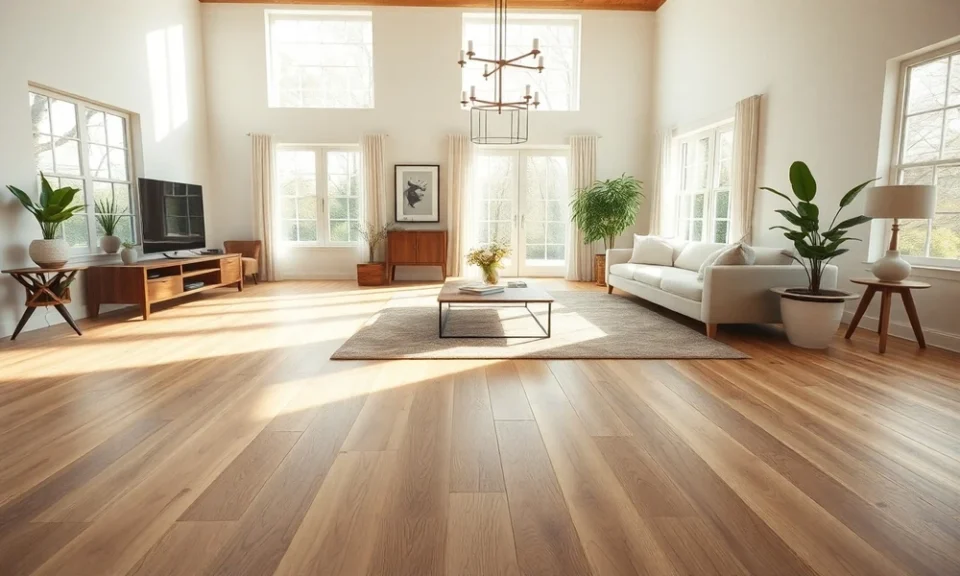
Oak flooring grade is one of those specifications that buyers often treat as a secondary decision, something to choose after the more obvious variables of solid versus engineered and board width. In practice, grade is one of the most visible characteristics of the finished floor and one that significantly affects how the floor looks, how it ages, and whether it suits the property it is being installed in.
Understanding what oak grades mean and what distinguishes them in practice makes the choice straightforward rather than arbitrary.
What Oak Flooring Grade Actually Means
Oak flooring grade is a classification of the visual characteristics present in the timber: the number, size, and distribution of knots, the degree of colour variation across boards, and the presence of other natural features such as medullary rays, sapwood, and grain variation. Grade does not indicate structural quality or durability: both prime and rustic grade floors are manufactured from the same species of oak to the same dimensional tolerances, and both will perform equally well underfoot. Grade is purely a visual classification.
This is a point worth emphasising because grading terminology can create a misleading impression. Rustic grade is not inferior to prime grade. It is a different aesthetic that suits different properties and interiors. The choice between them is a design decision, not a quality decision. A full range of solid oak flooring is available in both prime and rustic grades across multiple widths and lengths from UK specialists, with sample ordering available to compare grades in situ before committing.
Prime Grade: Clean, Consistent, and Formal
Prime grade oak is selected to minimise the natural features that create visual variation between boards. Knots are either absent or very small, colour variation across the floor is minimal, and the grain runs in a consistent, relatively straight pattern. The result is a floor with a clean, uniform appearance that reads as formal, refined, and deliberate.
Prime grade suits contemporary interiors where a minimal, consistent aesthetic is the goal: open plan living spaces, modern kitchens, and properties where the floor is intended to be a quiet backdrop to the furniture and decoration rather than a feature in itself. It also suits formal rooms and period properties where a traditional polished floor of consistent tone is architecturally appropriate.
The practical trade off of prime grade is visibility of wear. Against a consistent, clean background, every scratch, mark, and scuff is immediately apparent. In a high traffic hallway or a busy family kitchen, a prime grade floor requires more attentive maintenance to keep looking its best than an equivalent rustic grade floor.
Rustic Grade: Character, Warmth, and Resilience
Rustic grade oak retains the natural features that prime grade removes: knots of varying sizes distributed across the boards, pronounced colour variation from pale cream to warm brown and deep honey tones, and the grain movement and medullary ray patterning that give oak its distinctive character. No two boards look alike, and the floor as a whole has a rich, varied appearance that changes with the light throughout the day.
Rustic grade suits period properties, country houses, and any interior where warmth and character are the design goal rather than uniformity. The natural variation of rustic oak is architecturally at home alongside exposed beams, painted panelling, and traditional joinery in a way that prime grade’s cleaner surface is not. Rustic grade also has a significant practical advantage in lived in family homes: its natural variation disguises everyday wear remarkably effectively. A scratch or minor mark that stands out clearly against a prime grade board disappears into the knots and grain variation of a rustic floor.
Intermediate Grades
Many UK suppliers offer intermediate grades between prime and full rustic, described variously as select, natural, character, or AB grade depending on the manufacturer. These grades fall between the two extremes: more knot and colour variation than prime, but selected to exclude the larger knots and significant sapwood that appear in the full rustic range. They suit buyers who want some natural character without committing to the full variation of rustic, and they are often the most versatile choice for transitional properties that combine period features with more contemporary interior elements.
Matching Grade to the Property
The most reliable guide to grade selection is the architectural character of the property. Contemporary new builds, minimalist renovations, and formal period townhouses generally suit prime or select grade. Victorian and Edwardian terraces, country and cottage properties, farmhouses, and characterful period homes generally suit rustic or character grade. Transitional properties that combine elements of both suit the intermediate grades. Ordering samples of both prime and rustic in the intended board width and viewing them in the actual room under its own lighting is the most reliable way to confirm which grade fits the space before committing to a full order.
Frequently Asked Questions
Is prime grade oak flooring better quality than rustic?
No; both grades are manufactured from the same species to the same structural standards and will perform equally well underfoot; grade is a visual classification only and the choice between them is a matter of aesthetic preference and property character.
Does rustic grade oak flooring cost less than prime?
In many cases yes, as prime grade requires more selective cutting from the timber to produce boards with minimal knots, but the price difference varies between suppliers and the gap has narrowed as rustic grades have become increasingly popular.
Can I mix prime and rustic grade boards in the same floor?
Mixing grades is not recommended as the contrast between clean, knot-free boards and heavily knotted boards creates an inconsistent appearance that reads as a purchasing error rather than a deliberate design choice.
Does the grade affect the finish I should use?
No; both prime and rustic grade oak can be finished with oil, hard-wax oil, or lacquer; the choice of finish is independent of the grade and depends on the desired appearance and maintenance preference.
Final Thoughts
Oak flooring grade is a visual design decision, not a quality decision, and the right grade is the one that suits the architectural character of the property and the intended aesthetic of the interior. Prime grade delivers a clean, consistent, and formal result. Rustic grade delivers warmth, character, and natural variation that improves with age. Ordering samples of both grades and viewing them in the room before committing is always worthwhile: the difference between grades is considerably more apparent in context than in product photographs.
Specialist suppliers of solid and engineered oak flooring offer both grades across all principal widths and finishes with sample ordering for confident pre-purchase comparison.
