
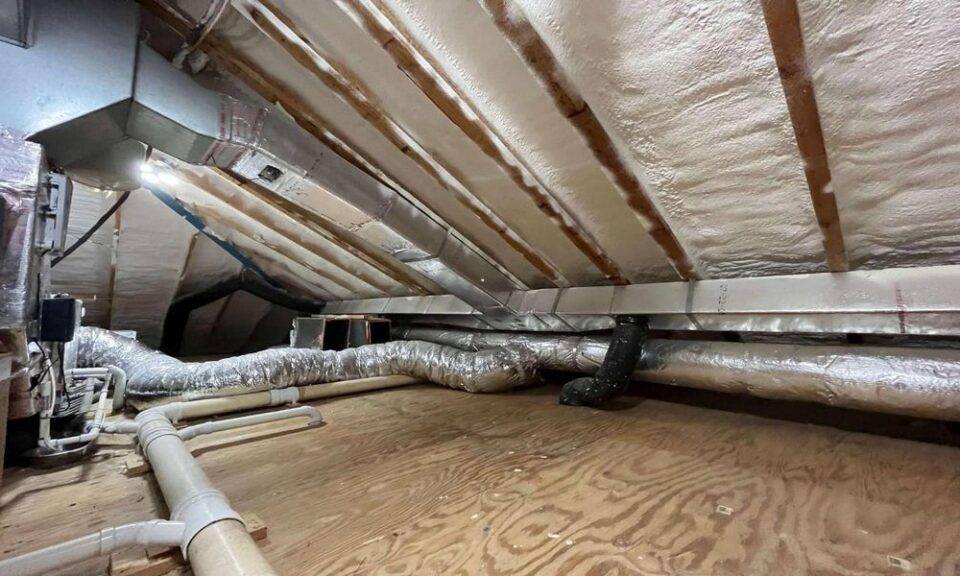
Heating and cooling account for a large portion of residential and commercial energy bills.
Inefficient HVAC systems with leaks or poorly insulated ducts waste energy and increase costs.
Spray polyurethane (PU) foam is a proven solution to improve efficiency and reduce utility bills.
Many homeowners and building managers are turning to PU foam to improve energy efficiency, indoor comfort, and system longevity.
Its ability to seal gaps and provide continuous insulation makes it an ideal choice for HVAC applications.
Understanding Heat Loss in HVAC Systems
Air leaks and poorly insulated ducts can result in 15-30% energy loss in heating and cooling.
Gaps at duct joints, cracks in plenum boxes, and unsealed attic penetrations allow conditioned air to escape.
Thermal bridging in metal ducts further contributes to heat transfer and wasted energy.
Even small leaks can increase blower work, reducing system efficiency.
Addressing insulation and sealing is crucial to optimizing HVAC performance and lowering utility costs.
What Is Spray Polyurethane Foam?
Spray PU foam is a two-component material that expands on application to seal gaps and insulate surfaces.
It adheres to metal, concrete, and wood, creating a continuous thermal barrier.
Two main types are used in HVAC systems:
- Closed-cell foam: Denser, moisture-resistant, higher R-value.
- Open-cell foam: Lighter, flexible, cost-effective for smaller ducts.
The expanding nature allows complete sealing of irregular surfaces, preventing energy loss.
How PU Foam Improves HVAC Efficiency
Spray PU foam enhances HVAC performance in several ways:
- Seals Air Leaks: Expands to fill gaps and cracks in ductwork.
- Reduces Thermal Loss: Provides a continuous insulation layer.
- Prevents Condensation: Closed-cell foam stops moisture buildup inside ducts.
- Improves Airflow Efficiency: Less leakage means lower energy consumption by blowers.
Properly applied PU foam ensures that conditioned air reaches intended areas, improving comfort and reducing utility bills.
Energy Savings and Cost Reduction
Buildings insulated with PU foam show significant energy savings.
Studies indicate 15-25% reduction in heating and cooling costs compared to traditional duct insulation.
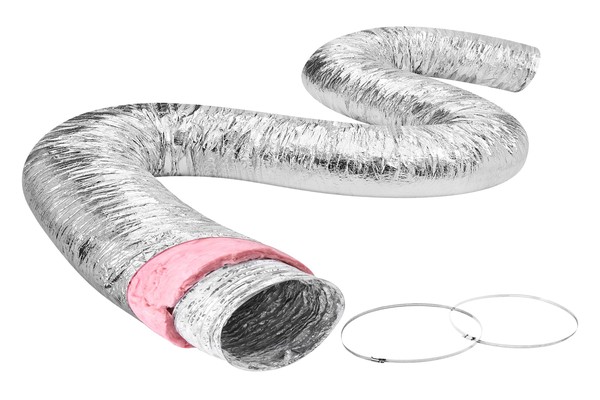
Traditional materials like fiberglass or duct wrap may leave gaps that compromise thermal performance.
PU foam provides better R-values per inch and minimizes leakage.
Energy Savings Comparison
|
Insulation Type |
R-Value per Inch |
Estimated Energy Savings |
|---|---|---|
|
Closed-cell PU Foam |
6-7 |
15-25% |
|
Open-cell PU Foam |
4-5 |
10-15% |
|
Fiberglass Duct Wrap |
3-4 |
5-10% |
|
Cellulose |
3.2-3.8 |
5-10% |
Applications of PU Foam in HVAC Systems
Spray PU foam is versatile for residential, commercial, and industrial HVAC systems:

- Duct Sealing: Fills gaps in metal or flexible ducts.
- Air Handler Insulation: Reduces thermal losses in air handling units.
- Attic and Roof Insulation: Minimizes heat transfer from unconditioned spaces.
- Plenum Boxes and Transition Sections: Ensures airtight connections.
Using PU foam in these applications increases system efficiency, reduces noise, and prevents energy loss.
Closed-Cell vs Open-Cell PU Foam for HVAC
Closed-cell PU foam:
- Higher density, stronger insulation, moisture barrier.
- Ideal for high-efficiency HVAC systems and commercial installations.
Open-cell PU foam:
- Lighter, easier to apply, cost-effective.
- Suitable for residential ducts and smaller systems.
Choosing the right type depends on budget, application, and desired energy savings.
Long-Term Benefits of PU Foam in HVAC
Spray PU foam provides multiple long-term advantages:
- Reduced Energy Bills: Less air leakage and thermal loss.
- Improved Indoor Air Quality: Fewer dust and pollutant pathways.
- Moisture Control: Prevents mold and corrosion in ducts.
- Durability: Long lifespan compared to fiberglass or duct wrap.
- Maintenance Savings: Less frequent repairs or insulation replacement.
Long-Term HVAC Benefits
|
Benefit |
Impact |
|---|---|
|
Energy Efficiency |
Reduced heating/cooling costs |
|
Air Sealing |
Fewer drafts, improved comfort |
|
Moisture Control |
Reduced mold and corrosion |
|
Durability |
Less frequent replacement |
Cost Considerations and ROI
PU foam requires a higher upfront investment than traditional insulation.
However, the long-term energy savings, improved comfort, and durability often justify the cost.
Factors affecting ROI:
- Duct size and length
- Climate and seasonal heating/cooling needs
- Type of PU foam (open vs closed cell)
- Installation quality and coverage
For most residential and commercial systems, PU foam pays for itself within 3-5 years through energy savings.
Installation Best Practices
- Certified Installers: Ensure proper mixing and expansion.
- Surface Preparation: Clean ducts of dust and debris before application.
- Ventilation During Installation: Protect installers and prevent off-gassing indoors.
- Coverage Consistency: Maintain correct thickness for maximum R-value.
Professional application ensures energy efficiency, durability, and safety.
Environmental and Safety Considerations
- Modern PU foams have low VOC emissions, safe for indoor use.
- Some formulations are fire-retardant, meeting building codes.
- Eco-conscious foams include recyclable or bio-based polyols.
- Proper installation prevents chemical exposure and ensures long-term safe performance.
Additional Advantages of PU Foam in HVAC
- Noise Reduction: Densely applied foam dampens sound from duct vibrations.
- Structural Support: Adds rigidity to flexible ducts.
- Adaptable to Retrofits: Can be applied to existing systems without major modifications.
These benefits make PU foam a cost-effective, high-performance solution for HVAC insulation.
PU Foam vs Traditional Duct Insulation
|
Feature |
PU Foam |
Fiberglass/Cellulose |
|---|---|---|
|
R-Value per Inch |
6-7 |
3-4 |
|
Air Sealing |
Excellent |
Moderate |
|
Moisture Resistance |
High (closed-cell) |
Requires vapor barrier |
|
Installation |
Professional spray |
DIY or contractor wrap |
|
Lifespan |
20-40 years |
15-25 years |
|
Energy Savings |
High |
Moderate |
Spray polyurethane foam is a highly effective solution for reducing heating and cooling costs in HVAC systems.
Its air-sealing, insulating, and moisture-resistant properties improve comfort and lower utility bills.
For building owners and homeowners seeking long-term energy savings and system efficiency, PU foam is the smart choice.
