
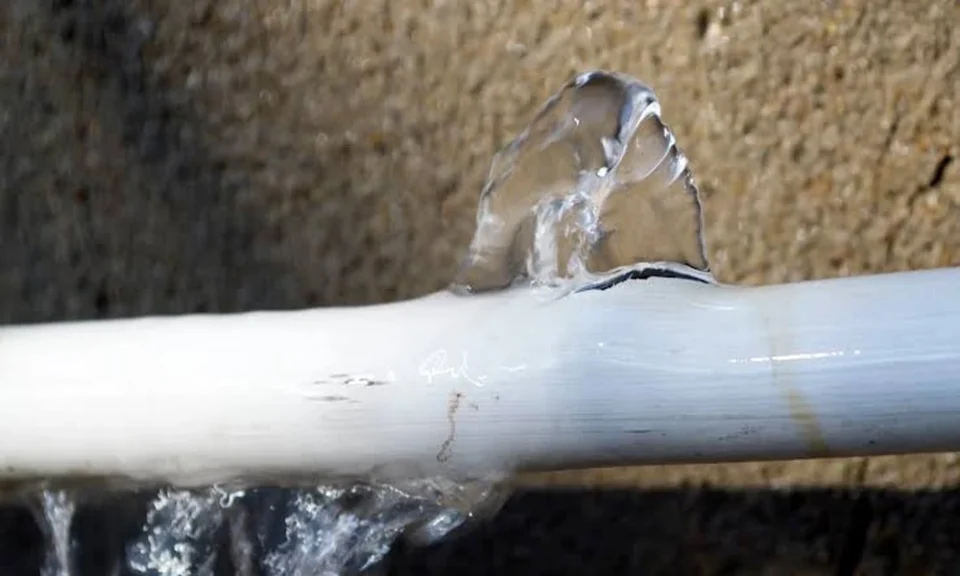
When the temperature drops below zero and stays there for a few days, most homeowners picture a pipe freezing solid and splitting open at that spot. That isn’t usually what happens. Ice forms in one section of pipe and blocks it. As more water freezes and expands, it pushes against the trapped water between the ice and the closed faucet. The pressure builds in that stretch until the pipe gives way, often a few feet from where the ice actually is.
This is why a burst can show up in a strange place, like inside a ceiling or behind a kitchen cabinet, with the frozen spot somewhere else entirely. Any experienced plumber in Lyons has seen it many times: a homeowner checks the pipe that looks frozen, finds it intact, and only finds the real split once the thaw starts and water begins spraying. Knowing how this works changes how you protect a house.
Most of the protection is simple and cheap. The American Red Cross recommends keeping the thermostat steady day and night and not setting it below 55°F when you’re away. The hard part is knowing where your own house is vulnerable.
Where Older Homes Lose the Fight
Cold doesn’t hit every pipe equally. In brick bungalows, raised ranches and older two flats, the trouble spots tend to repeat.
The outdoor faucet. An old style hose bib keeps water right up to the valve, just inside the wall. If a hose is left attached, the water can’t drain, so it freezes, and the split usually happens inside the basement where nobody sees it until spring.
Pipes along outside walls. Kitchen sinks under a window are a classic problem. The supply lines run through a cabinet against the exterior wall, and the closed cabinet door keeps warm air from reaching them.
The rim joist. Where the floor framing sits on the foundation, cold air leaks in through gaps. Pipes that run along this edge in an unfinished basement can freeze even when the rest of the basement feels comfortable.
Garages and crawl spaces. Any line passing through unheated space is exposed. A garage door left open on a windy afternoon can be enough.
The main line entry. The point where the water service comes through the foundation is often one of the coldest spots in the house, especially when the soil above it is frozen hard.
Getting Ahead of the First Hard Freeze
Fall is the best time to deal with these spots. Disconnect garden hoses, close the indoor shutoff valve for each outdoor faucet, and leave the outdoor faucet open so any trapped water has room to expand. If your home has a frost free sillcock, the valve sits farther inside the warm wall, but it still needs the hose taken off to drain properly.
Foam pipe sleeves cost very little and slide easily over exposed lines in basements and garages. For pipes that keep freezing anyway, a UL listed heat cable gives steady warmth and turns on by itself when temperatures drop. Sealing the rim joist with spray foam or rigid insulation helps both the pipes and your heating bill, because it closes the same gaps that let in cold air.
During a deep cold snap, open the cabinet doors under sinks on outside walls and let the faucet drip a little. Moving water is harder to freeze, and an open tap releases the pressure that actually causes bursts. A small drip costs much less than a ceiling repair.
When the Tap Only Trickles
A faucet that gives a weak stream or nothing at all on a bitter morning is an early warning. The pipe hasn’t necessarily split yet, and how you respond matters.
- Leave that faucet open so melting ice has somewhere to go.
- Trace the line back from the faucet toward the coldest part of the house, looking for frost on the pipe or a section that feels much colder than the rest.
- Warm the area slowly with a hair dryer, a heating pad or towels soaked in hot water.
- Keep the heat on until full water pressure comes back.
- Check the other faucets, since one frozen line often means others are close behind.
Never use an open flame. Torches used on frozen pipes have started many house fires, especially in old wood framed walls. If you can’t reach the frozen section or it won’t thaw, that’s when to call for help.
Finding the Shutoff Before You Need It
If a pipe does burst, every minute of running water adds to the damage. The main shutoff valve is usually near the water meter where the service line enters the house. Older houses often have a gate valve with a round handle that can seize after years of not being turned. Try it once in calm weather. If it won’t move or doesn’t fully stop the flow, have it replaced with a quarter turn ball valve that closes in one motion.
Everyone in the house should know where that valve is. Teenagers, house sitters and anyone checking on the place while you travel should be able to find it quickly.
Newer Tools Worth Knowing About
Plumbing technology has made winter easier. Smart leak sensors placed near the water heater, under sinks and beside the washer can send an alert to your phone when they detect moisture. Some whole house systems go further and watch the flow at the main line, shutting the water off automatically when they sense a burst or an unusually long draw.
When older pipes do get replaced, many homes now use PEX tubing. It can stretch a little when water freezes inside it, so it’s more forgiving than copper or galvanized steel, though it still isn’t freeze proof. Rerouting a problem line away from an exterior wall during a remodel often fixes a seasonal headache for good.
A Warm House Is Not Always a Safe One
What catches people off guard is that frozen pipes rarely show up in a house that feels cold. They happen in comfortable homes with one forgotten corner, like a drafty cabinet, a hose left on the faucet or a garage line nobody thought about. Spend an afternoon finding those spots before the first real cold snap, and know where your shutoff is, and winter becomes something you prepare for instead of something you clean up after.
