
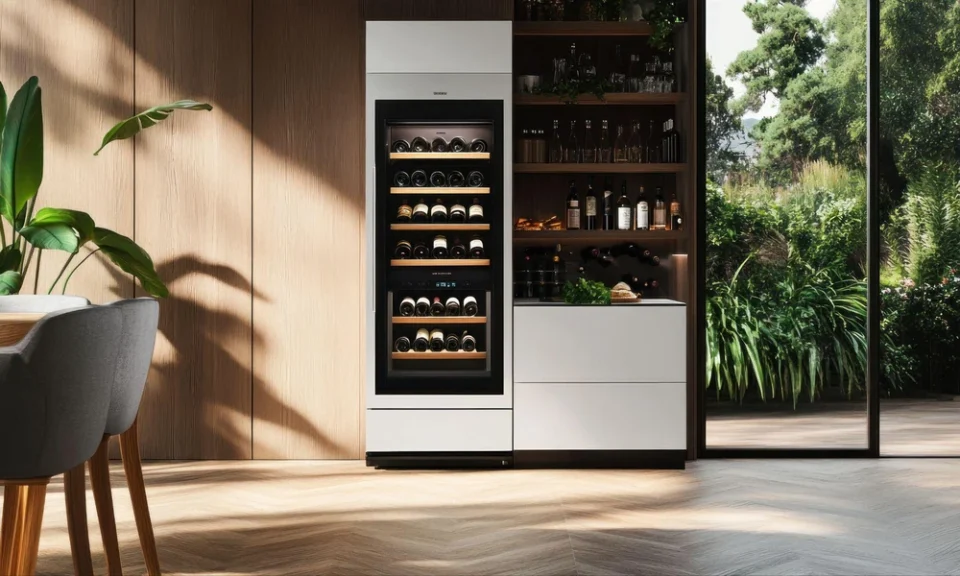
Limited floor space does not necessarily mean you need to give up dedicated cold storage. A small chest freezer can provide additional frozen-food capacity, while a small wine chiller can create a dedicated area for bottles without relying on the main refrigerator.
The challenge lies in choosing an appliance that fits the physical space while still providing useful capacity. Compact appliances need careful comparison because every centimetre can affect access and organisation.
When evaluating compact cooling solutions, households often discover that standard refrigerator units lack the dedicated environment required for specialised food preservation or beverage temperature control. Integrating secondary appliances into smaller residential layouts, such as apartments or condominiums, demands a deliberate approach to spatial planning, energy usage, and practical everyday accessibility.
1. Match the Appliance to the Storage Need
Start by identifying what you need to store. Frozen food, beverages and wine require different storage arrangements, so the appliance should match the primary purpose.
A small chest freezer may be useful for households needing additional frozen storage, while a small wine chiller can suit a more specialised collection.
Avoid choosing an appliance simply because it is compact. A smaller model may still be unsuitable if its internal layout does not fit your items.
2. Measure More Than the Appliance
Measure the intended installation area and the route used to bring the appliance into position. Include doorways, corridors and lifts where relevant.
Check opening requirements too. A chest freezer requires sufficient clearance for its lid, while a wine chiller needs space for its door to open.
Also consider ventilation. Follow the manufacturer’s instructions for the required clearance around the appliance.
A common oversight when installing compact cooling units is neglecting clearance around the exterior housing. Chest freezers dissipate heat through their side walls or rear condenser coils, while wine chillers require sufficient airflow to prevent compressor strain and temperature fluctuations. Leaving at least 5 to 10 centimetres of breathing room around vents prevents overheating and extends the operational lifespan of the unit.
3. Compare Practical Capacity
Look at the usable internal space rather than relying solely on the headline capacity. Shelves, baskets and racks affect how efficiently you can organise the contents.
Consider the size of the items you normally store. A model may provide sufficient volume but still be inconvenient if larger packages cannot be arranged easily.
For compact spaces, organisation can matter as much as total capacity.
4. Think About Access and Frequency of Use
Consider how frequently you will open the appliance. A freezer used for bulk storage may be opened less frequently than a wine chiller used when entertaining.
Place frequently accessed appliances somewhere convenient. A unit that technically fits into an awkward corner may become frustrating if reaching it is difficult.
Finding the right spot for secondary appliances requires creative utilisation of underused zones within the home. For wine chillers, under-counter alcoves, kitchen island side panels, or dining room buffets offer seamless integration into entertainment areas. Placing the chiller near dining spaces keeps beverages accessible without disturbing primary kitchen prep work.
Small chest freezers, on the other hand, fit well in utility closets, service yards, or pantry corners. Because chest freezers open from the top, ensuring clear vertical space above the unit is critical. Stacking lightweight shelving above the lid level allows you to preserve wall storage while keeping the freezer functional.
5. Maintenance Tips for Longevity
Routine maintenance keeps compact freezers and chillers running efficiently and prevents unpleasant odours or temperature drifts. Manual-defrost chest freezers should be defrosted whenever frost accumulation exceeds half a centimetre, as thick ice layers act as insulation and force the compressor to work harder.
For wine chillers, check door seals regularly to ensure an airtight closure. Dusting the rear coils every few months and wiping down internal wooden or wire shelves prevents mold growth and maintains optimal humidity levels for cork protection.
Suitability Table
| Space or Need | Suitable Direction | Main Consideration |
| Extra frozen-food storage | Small chest freezer | Floor area and lid clearance |
| Dedicated bottle storage | Small wine chiller | Bottle capacity and temperature |
| Tight kitchen area | Compact appliance | Door or lid access |
| Occasional storage | Smaller capacity | Avoid unnecessary floor space |
Compact cold storage works best when the appliance matches the actual purpose of the space. A small chest freezer and small wine chiller can each provide useful additional storage, but dimensions, access and internal capacity need to be checked before purchase.
Contact Kadeka to compare compact refrigeration options and find a suitable appliance for your available space.
