
When the power goes out, the first things most people want back are lights and a working refrigerator. In an East Tennessee ice storm or a muggy August heat wave, though, heating and cooling matter just as much. They are also the hardest loads for a generator to handle, which is why so many homeowners buy a unit that runs the fridge and nothing else. A local Lancing HVAC contractor can evaluate your equipment and electrical setup before you buy. This guide explains how generators interact with HVAC systems, how sizing works and what to know about installation and safety.
Why Heating and Cooling Are the Hard Part
Most of the electrical load in a typical home is modest. Lights, a television and a refrigerator draw relatively little. A central air conditioner or heat pump is different, because its compressor motor uses far more power than anything else in the house, and it demands a surge of power to start.
That surge is the key concept. Electrical equipment is described by two numbers:
- Running watts (continuous power): what the equipment uses once it is operating.
- Starting watts (surge or inrush power): the higher draw during the first moments as a motor starts, often much greater than the running load, commonly in the range of two to three times for a conventional compressor.
A generator has to cover the surge, not just the running load. A unit that looks big enough on paper can stall or trip when the compressor starts if it cannot supply the starting wattage.
How Different Systems Compare
Central air conditioner or heat pump (cooling mode). The compressor and the outdoor fan are the largest loads, plus the indoor blower. Larger tonnage means larger demand. The exact figures are listed on the equipment’s nameplate, which shows rated electrical values, and a technician can read them for you.
Gas or propane furnace. The burner uses fuel, so the electrical load is small: mostly the blower motor, the igniter and the control board. Furnaces are among the easiest HVAC loads to back up.
Electric furnace or heat strips. Electric resistance heating elements draw a large amount of power continuously. A heat pump system with supplemental electric strips can ask a great deal of a generator in cold weather, and many homeowners choose to exclude strip heat from the backed-up circuits or to manage how much runs at once.
Ductless mini-splits. Variable-speed units tend to draw less power and start gently, which makes them more generator-friendly than traditional single-speed systems.
Water heater, well pump and other motors. These add to the total. A home on a well may need the pump running to have water at all, and its starting load matters too.
The Sizing Process
Sizing a generator is a matter of adding up what you want to run, and accounting for the largest startup surge. A practical approach:
- Decide what must run. List essential loads, such as the furnace blower or heat pump, refrigerator and freezer, some lights, the well pump, a water heater and internet equipment. Decide whether central air conditioning is on the list.
- Find the running and starting watts for each. Read nameplate data on equipment or ask a professional. Motors typically list running amps and voltage, and some list locked rotor amps, which indicate startup demand.
- Add the running loads together. This is your continuous demand if everything operates at once.
- Add the largest starting surge on top. Motors do not usually all start at the same moment, so the usual approach is to add the single biggest surge to the total running load.
- Leave headroom. A generator running near its limit for long periods wears faster. Choosing capacity with a margin, commonly around 20 percent, is a common practice.
- Have a professional verify it. An electrician or HVAC technician can perform a load calculation and spot problems that a quick estimate would miss.
Whole-house standby generators, sized in kilowatts, are designed to carry much more of a home’s load than portable units, and some homeowners use load-management devices that rotate power among large appliances so a smaller generator can serve them.
Soft Starters and Other Ways to Reduce the Surge
If the startup surge is what pushes the generator size up, there are ways to bring it down. A soft-start device for an air conditioner reduces the inrush current, which can lower the generator capacity needed and also reduces stress on the compressor. Variable-speed equipment and inverter-driven mini-splits start gently by design. Your HVAC technician can tell you whether a soft starter is compatible with your system and whether it is worth the cost.
Portable vs Standby Generators
Portable generators are less expensive and flexible, but they must be set up outdoors, fueled and connected each time there is an outage. They are usually sized to run a selection of essentials, and powering central air with one often requires a large unit and a properly installed connection.
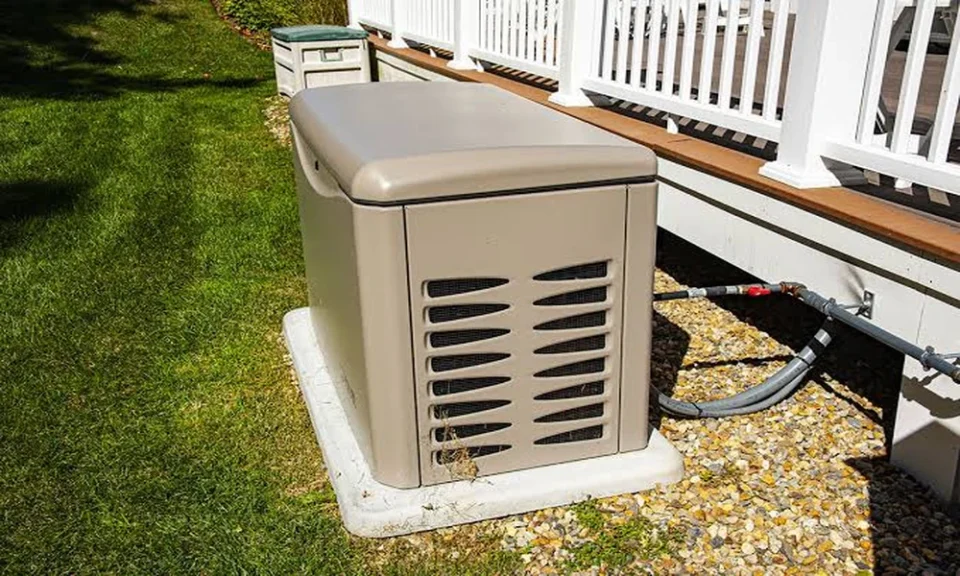
Standby generators are permanently installed outside the home, typically fueled by natural gas or propane, and start automatically when the power fails through an automatic transfer switch. They are more expensive and require professional installation, but they provide seamless power, and many can run most or all of a home’s loads.
The Transfer Switch Is Not Optional
To connect a generator to a home’s wiring safely, you need a transfer switch, which isolates the house from the utility grid. Without one, a generator can send electricity back through the lines, a hazard called backfeed that can injure or kill utility workers. Never plug a generator into a wall outlet using a homemade cord. A licensed electrician should install a manual or automatic transfer switch or an interlock device that meets code, and permits and inspections may be required in your county.
Safety With Fuel-Burning Equipment
Carbon monoxide is the major hazard of running generators. The Consumer Product Safety Commission warns that CO from portable generators can kill in minutes, and its generator safety guidance advises operating portable generators outside only, at least 20 feet from the house, with the exhaust directed away from the home and other buildings. It also advises never operating one in a garage, basement, crawlspace or shed, and looking for models with a CO shut-off feature. Working carbon monoxide alarms on every level of the home are essential.
Other safety points:
- Keep generators dry and wait for rain to pass, or use an approved protective enclosure, following the manufacturer’s instructions.
- Store fuel safely in approved containers, away from living spaces and ignition sources.
- Let the generator cool before refueling.
- Follow manufacturer instructions for placement of standby generators, including clearances from windows, doors and vents, and any local code requirements.
- In winter, clear snow from outdoor exhaust vents on high-efficiency furnaces so that carbon monoxide does not build up inside.
Fuel Considerations
- Natural gas is convenient for standby units and offers a continuous supply when service continues, though supply can be affected in some disasters.
- Propane stores well and is a common choice in rural areas, but it requires a tank sized for the expected runtime.
- Gasoline is common for portables, but it degrades in storage and must be refilled often during an extended outage.
- Diesel is used in some larger units but is less common for residential use.
Think about how long outages tend to last in your area. Winter ice and wind events on the Cumberland Plateau can bring multi-day disruptions, which affects how much fuel you need on hand.
Maintenance Keeps It Ready
A generator that fails on the first night of an outage is no help. Maintenance basics:
- Run portable units periodically, and follow the manufacturer’s schedule for oil changes and filter replacement.
- Have standby generators serviced annually, with battery checks, exercise cycles and load tests.
- Keep fuel fresh and use stabilizer when recommended.
- Test the transfer switch and make sure your carbon monoxide alarms work.
- Keep the area around the generator clear of debris, snow and vegetation.
Questions to Ask Before You Buy
- What loads does my HVAC system draw when running and starting?
- Should I use a soft starter or a different equipment configuration to reduce the surge?
- What generator size do you recommend for the loads I want to cover, and how did you calculate it?
- Which transfer switch or interlock is right for my panel?
- What permits and inspections apply to the installation?
- What fuel type suits my property and the likely length of outages?
- What maintenance and warranty come with the generator and the installation?
- How will the installation affect my homeowners insurance, if at all?
The Takeaway
Backup power for heating and cooling is a matter of matching the generator to the equipment’s starting and running demands, connecting it safely and keeping it maintained. Gas furnaces and ductless units are easier to support than conventional central air or electric heat strips. Get a professional load calculation, use a properly installed transfer switch, follow carbon monoxide safety rules and plan your fuel for the kinds of outages your area actually sees. Then the next storm becomes an inconvenience, not a crisis.
